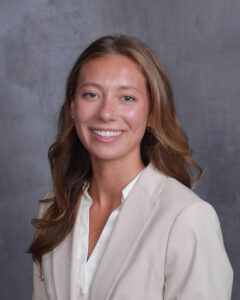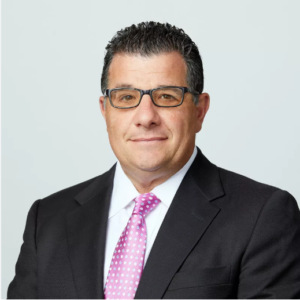

Celebrating 15 Years of Capterra Risk Solutions: A Reflection and Thank You from Sandra L. Maxim-Fenters

What a milestone! As Capterra Risk Solutions celebrates its 15th anniversary, my heart is full of pride and gratitude. I’m reflecting on the people, partnerships, and purpose that have shaped our journey. What began in 2010 has grown into an independent leader in captive consulting and insurance management, which is committed to unmatched expertise, integrity, and client-centered service. Fifteen years later, that commitment remains our foundation.

Our mission has always been clear: to help organizations expand insurance coverage, control losses, harness profits, and protect the assets they’ve worked so hard to build. Through feasibility studies, business plan development, underwriting, corporate governance, reinsurance, and the consulting and management of U.S. and international captives, we strive to bring clarity and confidence to an increasingly complex risk environment. This work is possible only because of the trust our clients and partners place in us. Your confidence fuels our resolve every day.

Our Vision
When I founded Capterra, my vision was simple: to create an organization where the fundamentals of insurance met forward-thinking risk strategies, creative problem-solving, and a culture that supported people in doing exceptional work. That aspiration became the foundation for the environment we have today—one built on ingenuity, collaboration, and a shared commitment to our mission.

We built our brand to reflect our mission.
Our name: “Cap” nods to the captive industry, while “terra”—Italian for “earth”—speaks to our national and international reach.
Our logo: A stylized globe reinforces that global perspective and brings the “terra” concept to life in our visual identity.

It Was Not Always Easy
Pursuing that vision came with its challenges. Professionally, I felt prepared—with the knowledge, determination, and entrepreneurial spirit needed to build something new. Personally, the path was less clear. As a single mother of three, balancing a demanding new venture with the responsibilities of family life was daunting. Many moments required deep reflection about how to move forward in a way that honored both my career aspirations and my children’s well-being.

Along the way, I heard countless reasons why starting Capterra might not be possible—concerns about risk, about timing, and about the barriers women often face in the insurance industry. However, what guided me wasn’t a sense of boldness or self-assurance; it was a genuine belief in the value this work could bring to clients and in the potential of the alternative risk space. That purpose kept me moving, step by step, even when the path felt uncertain.

Support from Family, Colleagues and Our Team
What I know for certain is this: no one succeeds alone. Building Capterra has always been a team journey. I relied on the unwavering support of my family, and I surrounded myself with colleagues, advisors, and industry partners whose insight and encouragement made the impossible feel achievable. My gratitude for them runs deep. Their support through the highs and lows helped shape Capterra into the organization it is today.

I am equally grateful for the people inside Capterra who make this mission real. Our team—professionals with deep experience in underwriting, claims, accounting, and finance—is the reason clients consider us one of their most trusted advisors. Their expertise, discipline, and genuine dedication are the heart of our culture and the key to our success.
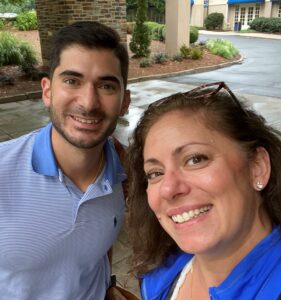
I want to offer special appreciation to Bill Eleamos, our Vice President of Finance and now Partner, who has been with Capterra since 2015. Bill’s leadership, financial stewardship, and steady commitment to our clients have been central to our growth. His work embodies the integrity and partnership we value most.

Looking ahead, developing the next generation of captive insurance leaders remains a personal priority. Our industry thrives when we identify, mentor, and elevate emerging talent—people who bring fresh thinking, analytical strength, and a passion for innovation. We will continue investing in young professionals and creating opportunities for them to grow and contribute meaningfully to our field.

Fifteen years is both a milestone and a beginning. To our clients, partners, team members, and friends—thank you for being part of our story. Together, we will continue building the future of captive insurance with expertise, integrity, and unwavering commitment.

Sandra L. Maxim-Fenters
President & Founder
Capterra Risk Solutions

Hard Market Resilience:
How Captive Insurance Provides Stability When Commercial Insurance Rates Soar


When premiums jump 20% or more seemingly overnight, most businesses scramble to cut coverage or absorb the hit. Companies with captives don’t. They keep control.

The insurance market moves in cycles. Sometimes it’s a “soft market,” with plenty of coverage options and competitive pricing. Other times, as in recent years, it’s a “hard market,” where rates climb steeply and insurers tighten terms and availability. Most businesses feel powerless in this environment. But there’s another path: captive insurance. By creating their own insurance subsidiaries, companies can stabilize costs, fill coverage gaps, and take real control of their risk. Let’s start by detailing hard markets and their impacts.

Statistics Tell the Story of This Latest Hard Market 

In the first quarter of 2023, Commercial Property saw rate increases of over 20% across the board; this represented the first time this line of coverage saw average rate hikes above 20% in over twenty years.  Rates continued to increase at this level throughout the latter half of 2023.  Although rate increases began to moderate in later 2024 and continue into 2025, companies still saw commercial rate increases of 10-20% in the second half of 2024, according to USI Insurance Services’ 2025 Commercial Property & Casualty Market Outlook.

While Property was the non-traditional leader of this latest hard market, Auto Liability was a little later to the game but saw significant rate escalation in 2024 and into 2025.  According to Business Insurance USA, Commercial Auto Insurance premiums have increased by 15-25% in the past year.

“Severe weather events in recent years have hit insurers with record losses,” said Derek Freihaut, Principal and Consulting Actuary, Pinnacle Actuarial Resources, Inc. “As carriers experience higher total losses from hurricanes, wildfires, and floods, they have to raise rates to cover the rising cost of these disasters.”

The cumulative effect of these sustained rate increases creates a hard market “misery index,” if you will, for businesses. The Council of Insurance Agents & Brokers (CIAB) confirms that commercial insurance premiums have increased for 31 consecutive quarters (over 7 Years).

Why Hard Markets Hurt Businesses

Hard markets don’t just sting—they disrupt. Companies are forced to absorb substantial price increases, which negatively impact budgets. Coverage limits also shrink, leaving businesses exposed. In certain industries, carriers may even pull out completely, leaving buyers with no options at any price. For companies without alternatives, the choices are grim: accept restrictive terms, overpay for coverage, or take on risks uninsured.

“The impact of the hard market extends well beyond price increases,” said Griff Gatewood, Senior Vice President, Alera Group. “Many companies have been forced to accept significantly higher deductibles just to keep rate hikes in check and maintain the limits they need. That means they’re taking on more risk themselves while still paying more—so their total cost of managing risk has risen sharply.”

What Captives Really Are

A captive is simply an insurance company that your business owns that insures specific risks of your business. Instead of sending premiums to outside insurers, a parent company funds its captive and pays premiums into it. The captive then writes policies to cover the parent’s risks. For exposures too large to retain alone, captives can buy reinsurance, giving them access to the same global safety nets commercial insurers use. The result: protection that meets your needs but operates on your terms, not the market’s.

Financial Stability That Compounds

Captives do more than save money in the short run—they build financial stability over time. Premiums stay in-house, improving long-term cash flow. Reserves held by the captive generate investment income, which benefits the parent company instead of an outside insurer. Pricing becomes far more predictable, making it easier to budget year after year. Depending on the structure and domicile, there may also be tax benefits, such as deductible premium payments or tax-deferred investment growth. Over time, captives shift insurance from a sunk cost into a strategic financial tool.

Flexibility and Control Over Coverage

Captives give businesses something the commercial market rarely offers: freedom. Policy language can be tailored to cover risks that traditional carriers exclude, from regulatory actions to supply chain disruptions. Claims handling can align with the company’s goals, not an insurer’s profit motives. Limits, deductibles, and terms can be set based on the company’s actual risk appetite. On top of that, captives provide full ownership of claims data, helping businesses spot patterns and strengthen their risk management programs.


Proof Across Industries

Captives are not a theory—they’re working solutions across industries. Capterra Risk sees this every day with our clients. Medical practices use captives to cover insurer reimbursement delays due to cyber issues. Construction companies use captives to address workmanship claims. Businesses make claims due to contingent business interruption from hurricanes and flooding. Tech firms cover fast-changing exposures like cyber liability and professional indemnity. Manufacturers often bundle property, liability, warranty and supply chain coverage into their captive, creating comprehensive protection. To read more about these case studies, visit this resource center.

Hard markets are inevitable, but they don’t have to dictate your costs or limit your options. Captives give companies a way to stabilize premiums, secure coverage, and take real control of their risk financing. The next hard market isn’t a matter of “if”—it’s a matter of “when.” The real question is whether your business will be ready for market instability with a captive that keeps you in control.

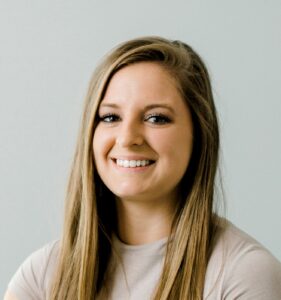
Capterra Risk Solutions Hires Terasa Fenters

Terasa is a graduate of the University of Pittsburgh, where she earned her degree in Economics with additional coursework in Accounting and Business. She began her professional career in technology sales, working closely with clients to understand their operational needs and deliver effective solutions. Through that experience, she discovered a deeper interest in how businesses manage risk strategically and take control of their long-term financial outcomes.

Her curiosity in the field of risk management eventually led her to Capterra Risk Solutions, where she spent time in a hands-on internship experience working alongside the Capterra team.

That experience sparked a strong interest in captive insurance and solidified her decision to pivot into the industry. Now, as a full-time Account Manager, Terasa is excited to help clients protect and strengthen their businesses through customized risk management strategies. She is currently preparing for her ACI (Associate in Captive Insurance) designation to further deepen her knowledge in the field.

Outside of work, Terasa enjoys traveling internationally, skiing at Mammoth Mountain, and surfing in southern California. Some of her favorite places to explore are the alpine mountains and lakes in northern California.

You can reach Terasa at tfenters@CapterraRisk.com.

Chemical Formulator Leverages Captive to Reduce Premiums at Appropriate Risk Level

The last few years have been a challenge for businesses and their insurance brokers in trying to navigate what is considered a hard market for commercial insurance.

Several factors drive a hard market, but typically we see shrinking reinsurance capacity resulting in restricted limits and coverage and higher premiums. What was unusual with this hard market was that property was primarily the line of coverage that was leading the hard market.  As a result, companies faced huge increases in premium for the same limits and terms, if those could be obtained. Or firms were forced into a large deductible at reduced limits and coverage in order to keep their premium at the same level.

Premium to Rise 4X

One of our clients, a specialty chemical products formulator, faced such an undesirable situation at their property insurance renewal. The CFO of the company approached us seeking our advice on how they could use their Captive Insurance Company to help reduce the sting of their property insurance renewal during this hard market. They had received word from their broker that their property premium was going from just under $200,000 annually to approximately $800,000 for the same limits and coverage terms.

The Game Plan

We suggested that our client ask the broker to obtain large deductible options from carriers in the commercial market that would be willing to offer that type of program.  We would then have the Captive provide a Deductible Reimbursement Policy for the chosen deductible to fully cover the deductible amount or a significant portion of it.

The broker was successful in getting a carrier to underwrite the program with a $1,000,000 deductible, which was what the client desired.  The commercial carrier issued a policy for the full limits desired with a $1,000,000 deductible as the initial layer that the client would be responsible for.  The client saved approximately $441,000 in premium with this option.

Selecting Appropriate Risk Level

The client then decided that their risk tolerance was $250,000 per claim, so they requested that the Captive write the Deductible Reimbursement Policy at $1,000,000 with a $250,000 deductible.  In other words, the captive would cover the $750,000 excess of the $250,000 retained by the client on a per-claim basis.  The premium for the Deductible Reimbursement Policy was approximately $175,000, so the net premium savings was approximately $266,000.

The client was able to deduct the premium for the Deductible Reimbursement Policy, just like they would for any of their other commercial premiums.  Therefore, they were able to achieve significant premium savings while having the coverage they desired for their risk tolerance.  They would also be able to capture profits from the favorable loss experience of the Captive while maintaining the deductibility of the premiums paid.  We felt this was a positive outcome for the client, who was in a difficult situation; this case demonstrates how valuable a captive can be.

Sandra Fenters Named to List of Influential Women in Captive Insurance

This feature ran in Captive International on June 16, 2024.

“I have had success, and therefore I believe I have an obligation to pass that on.”

Sandra Fenters is the president of Capterra Risk Solutions, working with entrepreneurs of closely held businesses, private equity firms, public entities, and not-for-profit organisations seeking to capture profits within their organisations by implementing solid risk management and loss prevention techniques.

The firm specialises in creating alternative risk transfer (ART) mechanisms and captive insurance companies. Fenters and her team provide captive management and consulting services for captive formations of all types including pure single parent, group arrangements, and association captives.

Fenters began her insurance career with a large international insurance company as a surety underwriter. Her experience spans multiple disciplines including surety, professional liability, commercial liability, and high net worth personal lines insurance. Fenters has authored numerous articles on captive insurance and was faculty for University of Delaware’s Captive Program. She is an active member of the Self-Insurance Institute of America and sits on committees specific to captives and advocacy.

Fenters is a graduate of Allegheny College and holds a BA in political science and a BA in English. She is also a graduate of the University of Pittsburgh Graduate School of Business Institute for Entrepreneurial Excellence, Fellows Class of 2010.

How did you get started in the captive insurance industry?

I started as an underwriter at Chubb Insurance and worked in Pittsburgh, Pennsylvania, and also in the headquarters in New Jersey. When I was in New Jersey I worked on reinsurance deals, which is how I became familiar with the captive insurance industry. I moved back to Pittsburgh to start a family and I have three children.

Then I worked for a brokerage firm headquartered in Pittsburgh. Eventually I decided to start my own insurance company, which is based in Utah, and start a captive management and consulting firm in Pittsburgh. Our clients are located all over the world, and we are in every domicile that is favourable to captive insurance.

Who inspired you or acted as a mentor?

I was mentored by the finest in the industry, which is very difficult to find nowadays. Looking globally for talent is key. I am very grateful for the mentors that were in my life, they became fathers to me.

What do you think deters people from entering the world of captives?

I see no limitations at all in terms of coming into the industry other than the willingness to understand the traditional terms and conditions of insurance and then applying the captive application to it.

How can mentorship and sponsorship programmes be designed to better support the career development of women?

That’s a tough question. I don’t think it’s about men or women—it’s about surrounding yourself with key talent across all states nationally and internationally, and I believe it’s about paying it forward. I have had success, and therefore I believe I have an obligation to pass that on.

What are your ambitions?

I’ve been able to establish my own insurance company as well as my own captive management consultant company. So in terms of ambition I’ve made my focus in life to be the best version of myself and the best mentor I can be to those I come in contact with.

July 16, 2024

I Am in Health Care: Every Day Is a Gamble

Dr. Barbara McAneny, CEO and President of New Mexico Oncology Hematology Consultants, LTD, has long been an advocate for captives and their ability to offload risk while reducing commercial insurance companies’ premiums that vanish from her practice’s bottom line.

In the winter of 2024, her practice along with other medical practices faced a major challenge.  Due to a cyber breach involving one of the medical industry’s largest claims processors, Change Healthcare, her practice could not process their patient claims immediately.

Dr. McAneny had upcoming payroll looming for almost 300 employees as well as other payables, such as buying chemo drugs for their patients, with no incoming cash from Change Health. The inability to process claims and secure cash flow would impact her practice for 16 weeks.

Fortunately, Dr. McAneny and New Mexico Oncology Hematology Consultants, LTD operated a private captive insurance company, which had built up cash reserves to mitigate for such a risk. Dr. McAneny leveraged the captive by accessing its surplus in order to help mitigate further loss due to the cyber breach.

In addition, the medical practice has coverage through the captive insurer for additional expenses.

Not all medical practices had the ability to mitigate risk for such a major event; some practices needed to be sold as they were not able to insure the risk of the cyberattack and loss of receivables for several  months.

Dr McAneny also appreciates captives for their ability to mitigate the risk of punitive damages which traditional insurance does not cover. Since the captive was created in 2011, it has protected the practice from many risky events.

Dr McAneny started working with Capterra in 2021 after gaining an understanding of the true role and value of a Captive Manager.  Speaking of service providers, she continued, “There are ones that say why you can’t do it, the others find ways to provide solutions in a safe, compliant way.  I need someone to think with me and be creative in mitigating uninsured risks of my practice.”

Construction Case Study: ACS

Captives Fill Gaps for Risk Mitigation for Construction Firm

Summary

Applied Construction Solutions (ACS), based in West Virginia, offers construction services to all sectors of the oil, gas, utility, midstream, and energy industries.

ACS was frustrated with higher premiums and gaps in its assorted risk-mitigation coverages-particularly in its employee benefits program.

Client Concern/Challenge

The rates from its traditional, fully-insured model continued to rise every year; the company believed its own claims were not high, but it had no visibility into the claims data. The firm found itself chasing lower rates annually by seeking competing programs from insurance carriers, with few benefits other than moderating the accelerating rate increases.

Solution

After research, ACS moved in 2022 to a self-insured group medical benefits captive that gave the team visibility into claims, group purchasing benefits, and the ability to share in insurance carrier profits through the size of the group.

After joining the medical benefits group captive, the ACS team began working with Capterra Risk on other ways to mitigate company risks.

ACS expanded into a single parent captive to cover risks around business interruption, cyber-attacks, excess pollution/environmental liability, deductible reimbursement, property, and crime/theft losses.

Results

Andria Alvarez Wymer, Director of Strategic Initiatives and Planning at ACS, says “in the first year of our single parent captive, we were able to receive reimbursement from a claim related to employee theft related to fraudulent invoices. Without the captive plan, ACS would have faced that loss.”

She adds that setting up an effective captive program is not simple and requires a skilled partner. “There is a huge learning curve,” says Ms. Alvarez Wymer. “The Capterra team is highly knowledgeable; they keep the program simple with ‘layman’s terms.’”

“Capterra is a great team with whom to work and are always available.”

Construction Case Study: Franjo Construction

Avoiding Taking It on the Chin

Summary

Franjo Construction, a Pennsylvania-based general commercial contractor, faces a wide range of risks in its construction business. Claims erode profitability.

Challenge:

A big issue for construction firms is workmanship claims.  Joe Leonello, Jr, President of Franjo Construction, points that ‘we as an industry make a lot of mistakes.’ This can be costly.

However, there can be many limitations to coverage provided by commercial carriers. Because of these limitations, construction firms like Franjo must take on significant risk. Mr. Leonello points out that “when there are claims, our profit for the job fades.”

Capterra Solution:

Capterra put together a single-parent captive that provided Franjo with the comfort to mitigate the risks as well as allow the firm to know its claim history to better price jobs and reduce future losses.

Results/Benefits:

“We built a hotel where select panels flew off the building a number of years after its completion,” says Joe Leonello. “We assessed the problem and fixed the issue but had to write off a substantial sum five years after the construction ended. This presented a challenge to our profits.”

With its captive program, the claim was fully paid by the captive – preserving Franjo’s annual profits.

“Franjo would have taken it on the chin had it not been for the captive insurance program.”

Captive Case Studies: Captives Hold the Answer for Safety-Conscious Construction Firms

This article ran in Captive Review, January, 2024

Here is a PDF copy of the article.

Three captive owners join Sandra Fenters of manager Capterra to share how captives have benefited their businesses.

In the face of ever-rising insurance premiums in the traditional market, more firms in the construction industry are turning to captive solutions.

In at least three cases,  Applied Construction Solutions (ACS), Franjo Construction, and the Massaro Construction Group, it has led to positive outcomes that have protected the businesses from sizable losses or generated a welcome new source of income.

All three partner with Capterra Risk Solutions, an alternative risk insurance consultant and licensed

captain manager, which works with many construction firms, as well as clients across many other industries.

Sandra Fenters is Capterra’s founder and president, and she points to the fact that the construction field is an industry class that has historically been rated by the traditional market as “highly risky” as to why many firms with lower claims look at captives.

“Firms in every industry deal with risk. Yet exposure to hazards is particularly significant to companies in the construction industry,“ Fenters says. “In many cases, the safer companies pay more to cover the risky, likely unsafe acts and resulting claims of the riskier companies.“

ACS Case Study

Andria Alvarez Wymer, Director of strategic initiatives and planning at ACS, is one who was frustrated with the increasing premiums for her construction firm’s healthcare programme.

The rates from its traditional, fully insured model continued to rise every year. The company, a general construction and transportation based in West Virginia, sensed that its claims were not high, but it had no visibility into the claims data.

As a result, the firm found itself chasing annually lower rates by seeking competing programmes from insurance carriers, with few benefits of moderating the accelerating rate increases.

These rising rates with no claim-driven explanation caused Alvarez Wymer to look to alternatives to better insure the health of her employees.

After research, ACS moved in 2022 to a self-insured group medical benefits captive that gave Wymer and her team visibility to claims, group, purchasing benefits, and the ability to share in insurance carrier profits through the size of the group.

“We now have nearly 2 years under our belt,” says Alvarez Wymer. “We are starting to see some big cost savings.”

High risk industry

Fenters highlights there are some obvious risks and exposures at a construction site to consider which explains why this industry is thought of as high risk.

These include the active use of equipment and tools; the moving of a large amount of raw materials and heavy building supplies; strenuous work by team members such as climbing and lifting; and extraordinary weather events causing business interruption.

In addition, it is very common for construction firms to engage external teams, such as suppliers, contractors, or subcontractors, who bring with them their own set of processes and risk.

“It does not take an actuary to spot the mini challenges of managing risk construction business,” Fenters says. “Consequently, many insurers will charge extra to cover for the perceived risk of the construction firms.”

Warranty

As well as site employee risk, construction firms need to warranty their projects

Joe Leonello, Jr, president of Franjo Construction, a general commercial contractor which employs 300 employees, says contractors make mistakes, and as a result, construction firms deal with the big issue of workmanship claims.

“Our firms need to take financial responsibility for these issues when they arise, says Leonello. “These uninsured claims – sometimes in the future – cause project profits to fade.”

Franjo started a single parent captive six years ago to manage such risks. He cites an example where a hotel that his firm built had an issue with panels blowing off the building several years after completion. Franjo remedied the situation. The captive covered the repair cost of $70,000.

“We would’ve taken it on the chin without the captive,” Leonello adds.

Leonello says the captive programme enables his firm to benefit from a better understanding of risks in general and the workmanship issue in particular.

“We gain risk management awareness,” he says. “We identify issues to reduce their likelihood of reoccurring. We can also price them clearly in future proposals – reducing the chances of a profit fade.”

Hard market

Fenters says that Alvarez Wymer’s and Leonello’s experiences of looking for ways to better understand claims, reduce expenses and mitigate risk are common among construction companies.

She says that the main use of captives and other alternative risk finance mechanisms by contractors began to increase with the admin of the hard insurance market cycle in the early 2000s.

The hard market with rising premiums, reductions and capacity, and tighter restrictions in coverage has continued, she adds.

To illustrate this she points to Marsh’s quarter 3, 2023 Global Insurance Market Index showing the composite pricing rising for the 24th consecutive quarter – the longest run of increases since the inception of the index in 2022.

Captive options

Most construction firms will either join a group captive or set up their own single parent captive, according to Fenters.

The Massaro Construction Group, a Pittsburgh-based general contractor, was looking in 2009 to boost its buying power on its nearly $1 million expenditure of annual commercial insurance premiums.

Its search led them to join a group captive which places $150 million annually in coverage, enabling its 120 group members to secure lower premiums and broader coverage.

David Massaro, president of Massaro Properties, also appreciates the equity members build up over time as a member in the captive.

As the captive closes out prior years of claims and risk, members are eligible for distributions based upon their equity in the captive.

“We’ve had distributions for 13 to 14 years of membership,” says Massaro.

Leonello says his firm seeks to join a group captive as well as to better cover more of their traditional policies.

Additional captives

After joining the medical benefits group captive, Alvarez Wymer and her team considered ways other ways to mitigate company risk.

The firm expanded into a single parent captive to cover risks around business interruption, cyber attacks, excess pollution/environmental liability, violence, property, and crime/theft losses.

“In the first year of our single parent captive, we were able to receive reimbursement for a claim related to employee theft related to fraudulent invoices,” she says. “Without the captive plan, ACS would have faced that loss.”

In addition, ACS also is a member of a second group captive that covers statutory traditional coverage, such as workers compensation, general liability, and auto coverages.

Fenters says that the positive experiences of these three captive owners illustrate the increasingly important role captive insurance plays for mitigation of construction industry, as an alternative to commercial insurance.”

“Construction’s inherent risks, any of which are not adequately covered by commercial policies, have led many principles to create single parent captives or to join group captives,” she adds.

This article ran in Captive Review, January, 2024 (paid subscription required to view article on Captive Review)

Learning and Lifting with Alyssa

This Emerging Talent Column ran in the January, 2024 edition of Captive Insurance Times. 

Alyssa Preidt of Capterra Risk Solutions speaks to Frances Jones about her experiences and influences in the industry

How has your previous experience prepared you for your current role as underwriting and claims manager?

When I accepted my first position in the captive industry, I was fresh out of college. I had a lot to learn that couldn’t come from a textbook, but I was eager.

My first role was as an underwriting associate. Since then, I’ve worked for a managing general agent and a couple of other captive firms.

These experiences prepared me in the best possible way for my current role. I learned from several teachers, who have global knowledge of both the captive and commercial insurance worlds. They have given me tools to understand how commercial and captive insurance can work together, determine sound underwriting principles, optimise meeting clients’ needs and properly adjudicate claims.

How did you end up in the captive industry?

When I graduated in May 2018, my former professor, Thomas Marshall, gave me a call notifying me that an individual from the industry was looking for a recommendation for a college graduate. He gave them my name and directed me to some resources to research more about captives.

Although we were given a high-level overview of captives in our college course material, it was not a main focus of the curriculum. After reading more, I realised that this unique industry intrigued me. Before I knew it, I was travelling down to South Carolina, spending a weekend interviewing and reading the company’s book on captives. I was offered the position shortly thereafter.

From your experience, what would you say are the key benefits of working in this industry?

The greatest benefit is the opportunity to meet entrepreneurs and executives from various different backgrounds, life experiences and industries. This is something that we get to participate in that is rarely replicated in other industries. In the captive world, I hear success stories from business owners from every walk of life.

Another benefit is the opportunity to customise an insurance programme to protect each business’ risks and assets, enabling me to think critically about specific needs and risks for different industries and businesses within those sectors.

Who have been your influences in the captive space?

There are too many influences to name them all, but there are a few in particular I’d like to thank — firstly my mentor, Alan Morris. He noticed a spark of potential in me and actively chose to develop, strengthen and foster what he saw. He continues to be a source of great inspiration to me.

Secondly, Jeff Ellington, senior vice president at Capterra Risk Solutions, has been a great teacher. He is the embodiment of an open-door policy. Jeff takes time to educate and challenge me when I need to consider a different perspective.

Lastly, Sandra Fenters, Capterra’s CEO and president, whose reputation precedes her. Since May 2022, I’ve had the pleasure to work for her. She is passionate about teaching other women in the industry and never misses an opportunity to mentor. Her ability to tell stories and connect with her clients is unparalleled.

What are your aspirations for your future career in the industry?

I’ve learned that I possess the skill of innovation, having worked on major initiatives to improve processes and systems at captive management firms. In the industry, I aim to make the processes, systems, and ways we do things simpler and more efficient. I want to continue pushing the industry forward.

What advice do you have for someone considering a role in captive insurance?

Be proactive. Put systems in place for renewal season. If you don’t have a process in place, it’s likely you will be scattered. Be prepared, work ahead and do the one extra task a day that will add up to major results by the end of the renewal season. Treat your colleagues and clients like family. Building a rapport with everyone you interact with can go a long way — there is never a situation where having a level of understanding, trust and empathy for your clients and colleagues will not serve you well.

Don’t sleep on opportunities to make improvements during your down season, the nine to 10-month period between renewals. Build a strong foundation in this season by making continual improvements. Ask questions, research, and push yourself outside of your comfort zone. You can learn about anything now on YouTube, even contractual liability!

“I became associated with Alyssa in 2018 at a South Carolina-based firm, Hamilton Captive Management. There, she led and participated in major initiatives where she consistently demonstrated strong technical knowledge of (re)insurance practices, understanding of risk management principles and the ability to effectively apply them to a broad range of functions. Additionally, the capacity to develop and effectively lead major initiatives and projects, to strategise, develop sound and effective insurance programmes, and to effectively communicate legal and regulatory issues to a wide range of internal and external audiences.

“Alyssa’s industry knowledge and her ability to provide guidance over a wide range of insurance initiatives and functions far exceed those common for her level of experience. They speak to her commitment to excellence as a professional and strong desire to add value on an ongoing basis.”

Alan Morris, ASA, ACAS, MAAA Consulting actuary and risk consultant Former chief actuary and risk officer for the Cayman Islands Monetary Authority

About Alyssa

Alyssa was raised in Belmont, North Carolina, among her family of seven. She has a passion for crossfit, is a crossfit coach and has transitioned to competitive weightlifting. In her spare time, she enjoys learning Hebrew and the piano, reading, gardening, playing with her dog Harley, and doing DIY home projects.

Alyssa has a bachelor’s degree in finance with a concentration in risk management and insurance from the Charlotte-based University of North Carolina.

Starting her career as a risk analyst at Hamilton Captive Management, she has previously held underwriting positions at Atlas Insurance Management and in the property and casualty insurance division of AmWINS Group.