
Celebrating 15 Years of Capterra Risk Solutions: A Reflection and Thank You from Sandra L. Maxim-Fenters

What a milestone! As Capterra Risk Solutions celebrates its 15th anniversary, my heart is full of pride and gratitude. I’m reflecting on the people, partnerships, and purpose that have shaped our journey. What began in 2010 has grown into an independent leader in captive consulting and insurance management, which is committed to unmatched expertise, integrity, and client-centered service. Fifteen years later, that commitment remains our foundation.

Our mission has always been clear: to help organizations expand insurance coverage, control losses, harness profits, and protect the assets they’ve worked so hard to build. Through feasibility studies, business plan development, underwriting, corporate governance, reinsurance, and the consulting and management of U.S. and international captives, we strive to bring clarity and confidence to an increasingly complex risk environment. This work is possible only because of the trust our clients and partners place in us. Your confidence fuels our resolve every day.

Our Vision
When I founded Capterra, my vision was simple: to create an organization where the fundamentals of insurance met forward-thinking risk strategies, creative problem-solving, and a culture that supported people in doing exceptional work. That aspiration became the foundation for the environment we have today—one built on ingenuity, collaboration, and a shared commitment to our mission.

We built our brand to reflect our mission.
Our name: “Cap” nods to the captive industry, while “terra”—Italian for “earth”—speaks to our national and international reach.
Our logo: A stylized globe reinforces that global perspective and brings the “terra” concept to life in our visual identity.

It Was Not Always Easy
Pursuing that vision came with its challenges. Professionally, I felt prepared—with the knowledge, determination, and entrepreneurial spirit needed to build something new. Personally, the path was less clear. As a single mother of three, balancing a demanding new venture with the responsibilities of family life was daunting. Many moments required deep reflection about how to move forward in a way that honored both my career aspirations and my children’s well-being.

Along the way, I heard countless reasons why starting Capterra might not be possible—concerns about risk, about timing, and about the barriers women often face in the insurance industry. However, what guided me wasn’t a sense of boldness or self-assurance; it was a genuine belief in the value this work could bring to clients and in the potential of the alternative risk space. That purpose kept me moving, step by step, even when the path felt uncertain.

Support from Family, Colleagues and Our Team
What I know for certain is this: no one succeeds alone. Building Capterra has always been a team journey. I relied on the unwavering support of my family, and I surrounded myself with colleagues, advisors, and industry partners whose insight and encouragement made the impossible feel achievable. My gratitude for them runs deep. Their support through the highs and lows helped shape Capterra into the organization it is today.

I am equally grateful for the people inside Capterra who make this mission real. Our team—professionals with deep experience in underwriting, claims, accounting, and finance—is the reason clients consider us one of their most trusted advisors. Their expertise, discipline, and genuine dedication are the heart of our culture and the key to our success.
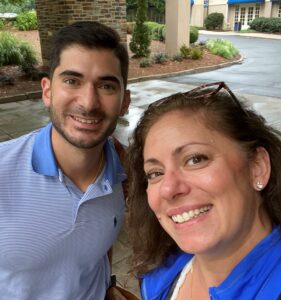
I want to offer special appreciation to Bill Eleamos, our Vice President of Finance and now Partner, who has been with Capterra since 2015. Bill’s leadership, financial stewardship, and steady commitment to our clients have been central to our growth. His work embodies the integrity and partnership we value most.

Looking ahead, developing the next generation of captive insurance leaders remains a personal priority. Our industry thrives when we identify, mentor, and elevate emerging talent—people who bring fresh thinking, analytical strength, and a passion for innovation. We will continue investing in young professionals and creating opportunities for them to grow and contribute meaningfully to our field.

Fifteen years is both a milestone and a beginning. To our clients, partners, team members, and friends—thank you for being part of our story. Together, we will continue building the future of captive insurance with expertise, integrity, and unwavering commitment.

Sandra L. Maxim-Fenters
President & Founder
Capterra Risk Solutions

Captive Case Studies: Captives Hold the Answer for Safety-Conscious Construction Firms

This article ran in Captive Review, January, 2024

Here is a PDF copy of the article.

Three captive owners join Sandra Fenters of manager Capterra to share how captives have benefited their businesses.

In the face of ever-rising insurance premiums in the traditional market, more firms in the construction industry are turning to captive solutions.

In at least three cases,  Applied Construction Solutions (ACS), Franjo Construction, and the Massaro Construction Group, it has led to positive outcomes that have protected the businesses from sizable losses or generated a welcome new source of income.

All three partner with Capterra Risk Solutions, an alternative risk insurance consultant and licensed

captain manager, which works with many construction firms, as well as clients across many other industries.

Sandra Fenters is Capterra’s founder and president, and she points to the fact that the construction field is an industry class that has historically been rated by the traditional market as “highly risky” as to why many firms with lower claims look at captives.

“Firms in every industry deal with risk. Yet exposure to hazards is particularly significant to companies in the construction industry,“ Fenters says. “In many cases, the safer companies pay more to cover the risky, likely unsafe acts and resulting claims of the riskier companies.“

ACS Case Study

Andria Alvarez Wymer, Director of strategic initiatives and planning at ACS, is one who was frustrated with the increasing premiums for her construction firm’s healthcare programme.

The rates from its traditional, fully insured model continued to rise every year. The company, a general construction and transportation based in West Virginia, sensed that its claims were not high, but it had no visibility into the claims data.

As a result, the firm found itself chasing annually lower rates by seeking competing programmes from insurance carriers, with few benefits of moderating the accelerating rate increases.

These rising rates with no claim-driven explanation caused Alvarez Wymer to look to alternatives to better insure the health of her employees.

After research, ACS moved in 2022 to a self-insured group medical benefits captive that gave Wymer and her team visibility to claims, group, purchasing benefits, and the ability to share in insurance carrier profits through the size of the group.

“We now have nearly 2 years under our belt,” says Alvarez Wymer. “We are starting to see some big cost savings.”

High risk industry

Fenters highlights there are some obvious risks and exposures at a construction site to consider which explains why this industry is thought of as high risk.

These include the active use of equipment and tools; the moving of a large amount of raw materials and heavy building supplies; strenuous work by team members such as climbing and lifting; and extraordinary weather events causing business interruption.

In addition, it is very common for construction firms to engage external teams, such as suppliers, contractors, or subcontractors, who bring with them their own set of processes and risk.

“It does not take an actuary to spot the mini challenges of managing risk construction business,” Fenters says. “Consequently, many insurers will charge extra to cover for the perceived risk of the construction firms.”

Warranty

As well as site employee risk, construction firms need to warranty their projects

Joe Leonello, Jr, president of Franjo Construction, a general commercial contractor which employs 300 employees, says contractors make mistakes, and as a result, construction firms deal with the big issue of workmanship claims.

“Our firms need to take financial responsibility for these issues when they arise, says Leonello. “These uninsured claims – sometimes in the future – cause project profits to fade.”

Franjo started a single parent captive six years ago to manage such risks. He cites an example where a hotel that his firm built had an issue with panels blowing off the building several years after completion. Franjo remedied the situation. The captive covered the repair cost of $70,000.

“We would’ve taken it on the chin without the captive,” Leonello adds.

Leonello says the captive programme enables his firm to benefit from a better understanding of risks in general and the workmanship issue in particular.

“We gain risk management awareness,” he says. “We identify issues to reduce their likelihood of reoccurring. We can also price them clearly in future proposals – reducing the chances of a profit fade.”

Hard market

Fenters says that Alvarez Wymer’s and Leonello’s experiences of looking for ways to better understand claims, reduce expenses and mitigate risk are common among construction companies.

She says that the main use of captives and other alternative risk finance mechanisms by contractors began to increase with the admin of the hard insurance market cycle in the early 2000s.

The hard market with rising premiums, reductions and capacity, and tighter restrictions in coverage has continued, she adds.

To illustrate this she points to Marsh’s quarter 3, 2023 Global Insurance Market Index showing the composite pricing rising for the 24th consecutive quarter – the longest run of increases since the inception of the index in 2022.

Captive options

Most construction firms will either join a group captive or set up their own single parent captive, according to Fenters.

The Massaro Construction Group, a Pittsburgh-based general contractor, was looking in 2009 to boost its buying power on its nearly $1 million expenditure of annual commercial insurance premiums.

Its search led them to join a group captive which places $150 million annually in coverage, enabling its 120 group members to secure lower premiums and broader coverage.

David Massaro, president of Massaro Properties, also appreciates the equity members build up over time as a member in the captive.

As the captive closes out prior years of claims and risk, members are eligible for distributions based upon their equity in the captive.

“We’ve had distributions for 13 to 14 years of membership,” says Massaro.

Leonello says his firm seeks to join a group captive as well as to better cover more of their traditional policies.

Additional captives

After joining the medical benefits group captive, Alvarez Wymer and her team considered ways other ways to mitigate company risk.

The firm expanded into a single parent captive to cover risks around business interruption, cyber attacks, excess pollution/environmental liability, violence, property, and crime/theft losses.

“In the first year of our single parent captive, we were able to receive reimbursement for a claim related to employee theft related to fraudulent invoices,” she says. “Without the captive plan, ACS would have faced that loss.”

In addition, ACS also is a member of a second group captive that covers statutory traditional coverage, such as workers compensation, general liability, and auto coverages.

Fenters says that the positive experiences of these three captive owners illustrate the increasingly important role captive insurance plays for mitigation of construction industry, as an alternative to commercial insurance.”

“Construction’s inherent risks, any of which are not adequately covered by commercial policies, have led many principles to create single parent captives or to join group captives,” she adds.

This article ran in Captive Review, January, 2024 (paid subscription required to view article on Captive Review)

Considering Worker’s Compensation Liability for Remote Employees

By Sandra Fenters

Many employees are now working from their homes.  This remote work trend is likely to continue even as ‘stay at home’ orders expire.

There are many benefits to this remote work during the quarantine. However, there are also some new issues that need to be considered since employers cannot realistically monitor the actions of their remote employees. This lack of active supervision presents some potential liabilities including worker’s compensation claims from accidental injuries sustained at ‘work.’

But how does an employer define ‘work’ when an employee works remotely? In a traditional office setting, company policies, typically defined in an Employee Handbook, state the physical boundaries of the office as well as the work hours. The worksite and work hours are more clearly defined and can be easily monitored in an office.

Working from home presents challenges

Employers can define remote ‘worksite’ and ‘work hours,’ but there are challenges particularly during this pandemic when everyone in a family is likely to be sheltered at home. For example, need for in-home child care may present issues to an employee’s work hours. Office setup will vary from team member to team member.

This raises the question: will worker’s accidental injuries sustained during business hours not defined in the employee handbook or in the traditional workspace be covered?

Also, questions may arise regarding what the worker was doing when the accident took place. A home office may present issues and risks that are not found in a traditional office setting. Was the employee undertaking an activity that was inconsistent with his/her scope of employment? If so, was the activity a mild ‘detour’ or an extreme ‘frolic’?

Finally, home offices may not be ergonomically compliant. OSHA estimates that about one-third of worker’s compensation claims come from claims involving ergonomic injuries.

Steps to mitigate risk

Establishing set hours specifically for your remote employees is one way to limit your exposure to accident liability. Also, it is important in policy manuals to identify activities that are acceptable and therefore covered under worker’s compensation as well as personal conduct that is not covered.  Additionally, employers will want to work with its remote employees to be sure their work areas are not only safe but consistent with their specialized physical work needs.

It is important that employers outline remote work policies to inform employees as well as mitigate risk.

SIIA Objects to IRS Notification Letter

By Sandra Fenters

On March 20th, just four days after the National Covid-19 Emergency was declared, The IRS sent 150,000 letters to captive insurance companies who take the 831(b) election.

This memo was clearly designed to ignite fear in the minds of captive insurance owners.  It’s yet another scare tactic in the Services’ bullying efforts to induce doubt about the health and viability of captive insurance arrangements.

The timing for the IRS could not have been poorer. Despite presenting massive challenges to the global economy, the coronavirus pandemic may well be captive insurance companies’ finest hour. Last week a number of publications highlighted that high severity, low-frequency events like Covid-19 are when captive insurance shows its’ real value in protecting America’s small and mid-sized businesses from disaster.

SIIA Expresses Concerns about Ill-Timed Letters

The Self-Insurance Institute of America (SIIA) wrote to Treasury and IRS on March 30, calling the letters “insensitive and draconian.”

Ryan Work, SIIA VP of Government Relations who leads the SIIA Advocacy Committee on which I am very active, requested that the IRS reconsider its letter and its timeframes given the crisis.

Given the current crisis, combined with the timing and the burden being placed on small- and medium-sized businesses, the IRS should suspend further audit activity until the National COVID-19 Emergency Declaration is withdrawn so as to allow businesses operating captive insurance to mitigate the risks that Congress and the Tax Code allow them to appropriately address. Furthermore, while the deadline is suspended, the overall need for the IRS Letter itself should be reconsidered and information clarified as it is possible for the IRS to deduce the answers to its own questions from information that has already been reported by taxpayers who have complied with the requirement to file Form 8886 over the past two years.

Here is a link to the full SIIA letter to Treasury Secretary Mnuchin and IRS Commissioner Rettig.

We are hopeful that captive insurance companies play a pivotal role in covering losses in the coming months of the pandemic and that the IRS recognizes their critical and legitimate role in mitigating risk not properly covered by other insurance products.

Captive Insurance Shines in Pandemic

Despite Presenting Challenges, Coronavirus May Well Be Captive Insurance’s Finest Hour

By Sandra Fenters

Times like these are when captive insurance shows its’ real value in protecting America’s small and mid-sized businesses from disasters.

What we are seeing is:  operating businesses with captive programs that insure relevant risks have both more complete and flexible insurance as well as access to more capital than most of their competitors. This is a major benefit.

The media is beginning to notice

There have been two columns written in the last few days that highlight what captive insurance brings to cover unlikely events.

Columnist Paul Sullivan of the New York Times wrote an article titled, “Once Scrutinized, An Insurance Product Becomes a Crisis Lifeline.”   In it, Sullivan points out that:

“[Small Captive Insurance companies are] proving to be beneficial as the coronavirus pandemic shuts down local economies.”

Some of the more common coverage options, like the risk that business will be interrupted or a supply chain disrupted, are claims that business owners need to make. In this economic crisis, captives may be showing their worth.”

And yet another view:

Reporter Maria Ward-Brennan of the Captive Insurance Times interviewed Ben Whitehouse, an attorney nationally recognized in the captive insurance industry.  Whitehouse states:

“The current COVID-19 pandemic is creating captive insurance’s chance to shine” and the “time is now for companies to start looking at captive insurance.”

“It is this kind of environment where a captive insurance company can be given a chance to shine. A captive not only gives businesses the chance to recapture unused premium, but it also allows for more flexible policy forms without the fine print exclusions that lead to coverage gaps.”

The full article is here.

While the full effects of the coronavirus on the economy are yet to be tallied up, the businesses with captive insurance policies are in a stronger position to mitigate their risks and thrive in the future.

SIIA Believes IRS’ Recent Press Release on Captives Is Misleading

You may have heard that the IRS recently published a News Release (2020-26)  which provided an update to its settlement offer to certain taxpayers who are currently under audit with their captive program.

During last weeks’ meeting in Miami, FL with the Self Insurance Institute of Americas’ (SIIA) Captive Advocacy Committee, Capterra Risk Solutions requested that SIIA research the IRS’ claims and provide a summary of their findings. The article summarizing their findings can be found here.

Summary:

  • The IRS claims that nearly 80% of taxpayers under audit that are receiving these settlement offers agreed to such settlements and announced the establishment of 12 audit teams to look at certain captive structures.
  • The release is misleading because 80% of the taxpayers have agreed to consider a settlement, not actually settle.
  • In SIIA’s research, not a single captive has engaged in a final settlement agreement.
  • The IRS’ supposedly 12 audit teams will most likely be looking at other issues unrelated to the captive industry, not solely focusing on captives themselves.

We agree with SIIA’s view that the IRS release is misleading.

As early adopters of the SIIA Captive Code of Conduct, as well as contributing authors of industry best practices and trailblazers in advocacy efforts, we will continue to bring you the latest developments directly from Capitol Hill.

Advocacy Work Continues

There may be a lot going on in Washington these days…but that does not slow down SIIA’s advocacy work to better educate and inform lawmakers about captiveinsurance and its’ many benefits.

In November, my #SIIA colleagues and I met with Pennsylvania Senator Bob Casey’s Chief of Staff, Kristen Gentile, as well as Representatives Trey Hollingsworth (R-IN) who is on House Financial Services Committee, and U.S. Congressman James Comer (R-KY).

In February, I will travel to Miami for an event with Senator Marco Rubio and Julie McPeak, former Insurance Commissioner of Tennessee.

Advocacy work takes time, effort, financial resources, and involves many individual meetings. My SIIAAdvocacy colleagues and I are committed to the journey.

Partnering with SIIA to Shape Captive Insurance Policy in DC

By Sandra Fenters

Over the last 5 years, we have seen a whirl wind of activity around captive insurance in Washington. Some very positive; some less so.

Consider the following:

  • Farm mutuals received a boost with the 2015 PATH (Protecting Americans from Tax Hikes) Act.
  • In the initial versions, small business captives (taking the 831b election) were originally omitted, but with some lobbying, they were ultimately included in the final bill. Consequently, these captives enjoyed a healthy increase in tax deductibility limits of insurance premiums; this was a big boost for small business captives, and it looked like the captive market for small businesses would boom.
  • The Treasury and IRS had seen abuses over the years with select captive plans and began to cast a suspicious eye on many existing captive policies. The IRS issued a series of onerous Notices (for example: 2016-66), ramped up audits and filed a number of lawsuits to target broadly any possible abuses.
  • Part of the challenge was that Congress did not specify much of the detail of the new rules which led to industry and government confusion.
  • So despite the gains for small business captives (taking the 831b election) in 2015, an aggressive IRS has muted much of the gains.


Helping to Steer the Policies

With this uncertainty, SIIA (The Self-Insured Institute of America) and its Captive Advocacy Team have been active for the last few years to help shape the legislation and policies related to small business captives utilizing the small captive tax election.

I have been active on the Captive Advocacy Team since 2015 and have made over a dozen trips to DC to support these efforts. We focus on informing the legislators about the benefits of captives and are aware of the onerous reporting requirements.

My most recent trip was this Spring when colleagues and I met with the legislative teams of Richard Burr (NC), PatToomey (PA) and David Perdue (GA). During the blitz, 13 SIIA Advocacy Team members met with 38 legislative teams.


SIIA Advocacy Going Forward

Ryan Work, Vice President, Government Relations of SIIA, leads this governmental advocacy program and comments that after a few years of a more reactive mindset of ‘putting out fires,’ the Team plans to be more proactive in its lobbying efforts in Washington.

My next scheduled visit is November 20, 2019.

Please let me know if you have any questions or input on this program.

Gaining Momentum: Hybrid Captives

By Sandra Fenters

Clients have traditionally looked to captive programs as a business strategy to protect their businesses by insuring property and casualty coverage gaps and/or their enterprise risks not covered in the traditional market.

Importance of Human Capital

One trend we’ve seen gaining momentum for a number of years is business owners looking to better manage the risks and costs on what many view as their ‘most important’ asset: their human capital.

These owners are asking us how they can utilize their existing captive structures to:

  • insure their employee benefits,
  • improve safety programs,
  • enhance risk management techniques, and
  • encourage behaviors to avoid certain types of risk.

For those with existing captives, particularly with property and casualty licensed captives, we are able to formally request a business plan change to add coverages, such as medical reimbursement.

‘Blend’ Captives

This is a hybrid type of program which allows the captive to issue property casualty policies, enterprise risk policies and some health care-related policies.  It is a  true blend.

What Does This Mean for Existing Captives?

There are ‘moving parts’ with all captives, but there are additional things to think about when writing coverages that involve your Company’s Human Capital, including but not limited to educating yourself on requirements of The Department of Labor and ERISA.  If you add such coverages, you may notice changes within the captive, including the following:

  • It changes balance sheets.
  • There are different requirements around reporting to regulators.
  • It alters required loss reserves.

Therefore, some caution is warranted.

But there are certainly advantages for some Companies to add coverages, such as medical reimbursement to their underwriting program, and we expect to continue to see this trend.

Questions?

If you have questions about how such a plan could benefit you, please contact us.

Capterra Risk Solutions, LLC

842 5th Avenue

Coraopolis, PA 15108

412-802-2600

information@capterrarisk.com

IRS Announces Settlement Offers for Select Captives


Update from Sandra Fenters

The IRS issued a notice earlier this week which provides a settlement offer to certain taxpayers who are currently under audit and possess bad fact patterns within their captive program.

According to DugganBertsch, the IRS has touted several recent victories with respect to “micro-captive” transactions, but these cases have illustrated bad taxpayer fact patterns that were strongly in the IRS’s favor. By litigating these bad fact pattern cases first, the IRS hopes to discourage taxpayers with stronger fact patterns from continuing their defense of their positions. However, many of the several hundred pending cases in Tax Court have more taxpayer-favorable facts and circumstances; they are likely to create a more favorable precedent.

Capterra Risk is very active on Capitol Hill, and our staff regularly conducts Congressional meetings focused on key committees of jurisdiction, including Senate Finance and House Ways and Means, as well as leadership and Chairman offices. This ongoing engagement centers around educating Members of Congress and their staff about captive insurance in general, the importance of risk mitigation and the issues facing the captive owners and managers. As part of this effort, Capterra is working to establish a set of proactive principles to help further advance and benefit the industry, in partnership with state and federal regulators.

While the recently announced settlement only applies to a small percentage of captives under current IRS examination, we wanted to make you aware of the Notice.

If you would like to discuss this news further, please contact Capterra Risk at 412.802.2600.