


When premiums jump 20% or more seemingly overnight, most businesses scramble to cut coverage or absorb the hit. Companies with captives don’t. They keep control.
The insurance market moves in cycles. Sometimes it’s a “soft market,” with plenty of coverage options and competitive pricing. Other times, as in recent years, it’s a “hard market,” where rates climb steeply and insurers tighten terms and availability. Most businesses feel powerless in this environment. But there’s another path: captive insurance. By creating their own insurance subsidiaries, companies can stabilize costs, fill coverage gaps, and take real control of their risk. Let’s start by detailing hard markets and their impacts.
Statistics Tell the Story of This Latest Hard Market
In the first quarter of 2023, Commercial Property saw rate increases of over 20% across the board; this represented the first time this line of coverage saw average rate hikes above 20% in over twenty years. Rates continued to increase at this level throughout the latter half of 2023. Although rate increases began to moderate in later 2024 and continue into 2025, companies still saw commercial rate increases of 10-20% in the second half of 2024, according to USI Insurance Services’ 2025 Commercial Property & Casualty Market Outlook.
While Property was the non-traditional leader of this latest hard market, Auto Liability was a little later to the game but saw significant rate escalation in 2024 and into 2025. According to Business Insurance USA, Commercial Auto Insurance premiums have increased by 15-25% in the past year.
“Severe weather events in recent years have hit insurers with record losses,” said Derek Freihaut, Principal and Consulting Actuary, Pinnacle Actuarial Resources, Inc. “As carriers experience higher total losses from hurricanes, wildfires, and floods, they have to raise rates to cover the rising cost of these disasters.”
The cumulative effect of these sustained rate increases creates a hard market “misery index,” if you will, for businesses. The Council of Insurance Agents & Brokers (CIAB) confirms that commercial insurance premiums have increased for 31 consecutive quarters (over 7 Years).
Why Hard Markets Hurt Businesses
Hard markets don’t just sting—they disrupt. Companies are forced to absorb substantial price increases, which negatively impact budgets. Coverage limits also shrink, leaving businesses exposed. In certain industries, carriers may even pull out completely, leaving buyers with no options at any price. For companies without alternatives, the choices are grim: accept restrictive terms, overpay for coverage, or take on risks uninsured.
“The impact of the hard market extends well beyond price increases,” said Griff Gatewood, Senior Vice President, Alera Group. “Many companies have been forced to accept significantly higher deductibles just to keep rate hikes in check and maintain the limits they need. That means they’re taking on more risk themselves while still paying more—so their total cost of managing risk has risen sharply.”
What Captives Really Are
A captive is simply an insurance company that your business owns that insures specific risks of your business. Instead of sending premiums to outside insurers, a parent company funds its captive and pays premiums into it. The captive then writes policies to cover the parent’s risks. For exposures too large to retain alone, captives can buy reinsurance, giving them access to the same global safety nets commercial insurers use. The result: protection that meets your needs but operates on your terms, not the market’s.
Financial Stability That Compounds
Captives do more than save money in the short run—they build financial stability over time. Premiums stay in-house, improving long-term cash flow. Reserves held by the captive generate investment income, which benefits the parent company instead of an outside insurer. Pricing becomes far more predictable, making it easier to budget year after year. Depending on the structure and domicile, there may also be tax benefits, such as deductible premium payments or tax-deferred investment growth. Over time, captives shift insurance from a sunk cost into a strategic financial tool.
Flexibility and Control Over Coverage
Captives give businesses something the commercial market rarely offers: freedom. Policy language can be tailored to cover risks that traditional carriers exclude, from regulatory actions to supply chain disruptions. Claims handling can align with the company’s goals, not an insurer’s profit motives. Limits, deductibles, and terms can be set based on the company’s actual risk appetite. On top of that, captives provide full ownership of claims data, helping businesses spot patterns and strengthen their risk management programs.
Proof Across Industries
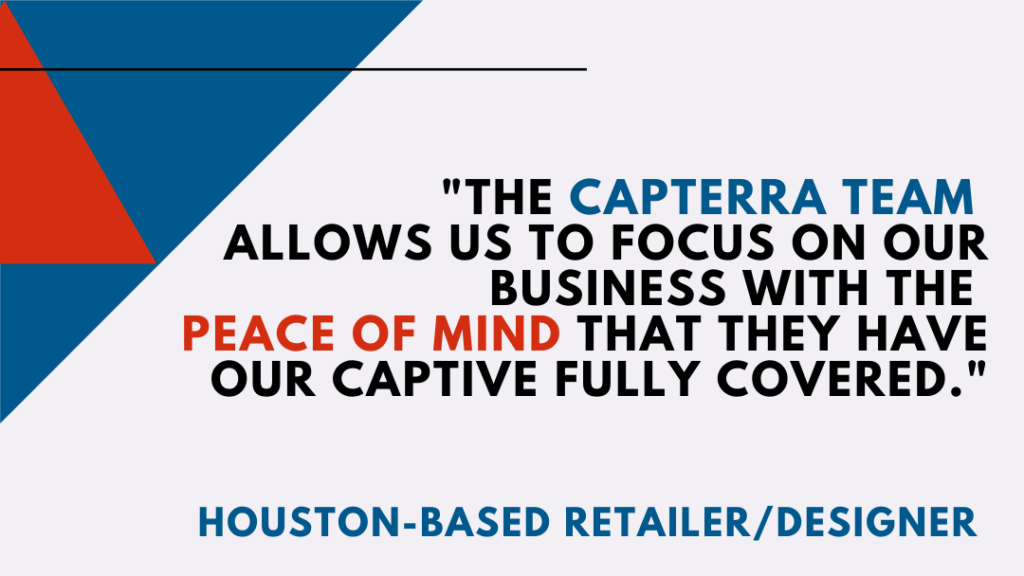
Captives are not a theory—they’re working solutions across industries. Capterra Risk sees this every day with our clients. Medical practices use captives to cover insurer reimbursement delays due to cyber issues. Construction companies use captives to address workmanship claims. Businesses make claims due to contingent business interruption from hurricanes and flooding. Tech firms cover fast-changing exposures like cyber liability and professional indemnity. Manufacturers often bundle property, liability, warranty and supply chain coverage into their captive, creating comprehensive protection. To read more about these case studies, visit this resource center.
Hard markets are inevitable, but they don’t have to dictate your costs or limit your options. Captives give companies a way to stabilize premiums, secure coverage, and take real control of their risk financing. The next hard market isn’t a matter of “if”—it’s a matter of “when.” The real question is whether your business will be ready for market instability with a captive that keeps you in control.